




By MICHAEL CRIMMINS
Glasgow News 1
Today, Jan. 19, is Martin Luther King Jr. Day in the United States, but visitors to national parks will still need to pay entry fees.
Martin Luther King Jr. Day is not listed among those 2026 days designated by the U.S. Department of Interior as fee-free days for U.S. national parks. In years past, Mammoth Cave National Park has offered free cave tours during this federal holiday. President Donald Trump’s executive order that removed MLK Day from the fee-free calendar also removed Juneteenth from the designated fee-free days in 2026, according to the department.
The “resident-only patriotic free-fee days” are President’s Day, Memorial Day, Flag Day — which is also Trump’s birthday — Independence Day weekend, 110th birthday of the National Parks Service, Constitution Day, Theodore Roosevelt’s birthday and Veterans Day, according to the department.
The federal holiday was added to the fee-free day calendar in 2011 where it remained an annual free day until this year.
MLK Day became a federal holiday on Nov. 2, 1983, when U.S. President Ronald Reagan signed the bill that honors the chief spokesperson of the nonviolent Civil Rights Movement. The federal holiday is celebrated annually on the third Monday in January; it was first celebrated on Jan. 20, 1986, according to the National Constitution Center. It wasn’t until 2000 that all 50 states recognized the holiday, according to the National Constitution Center.
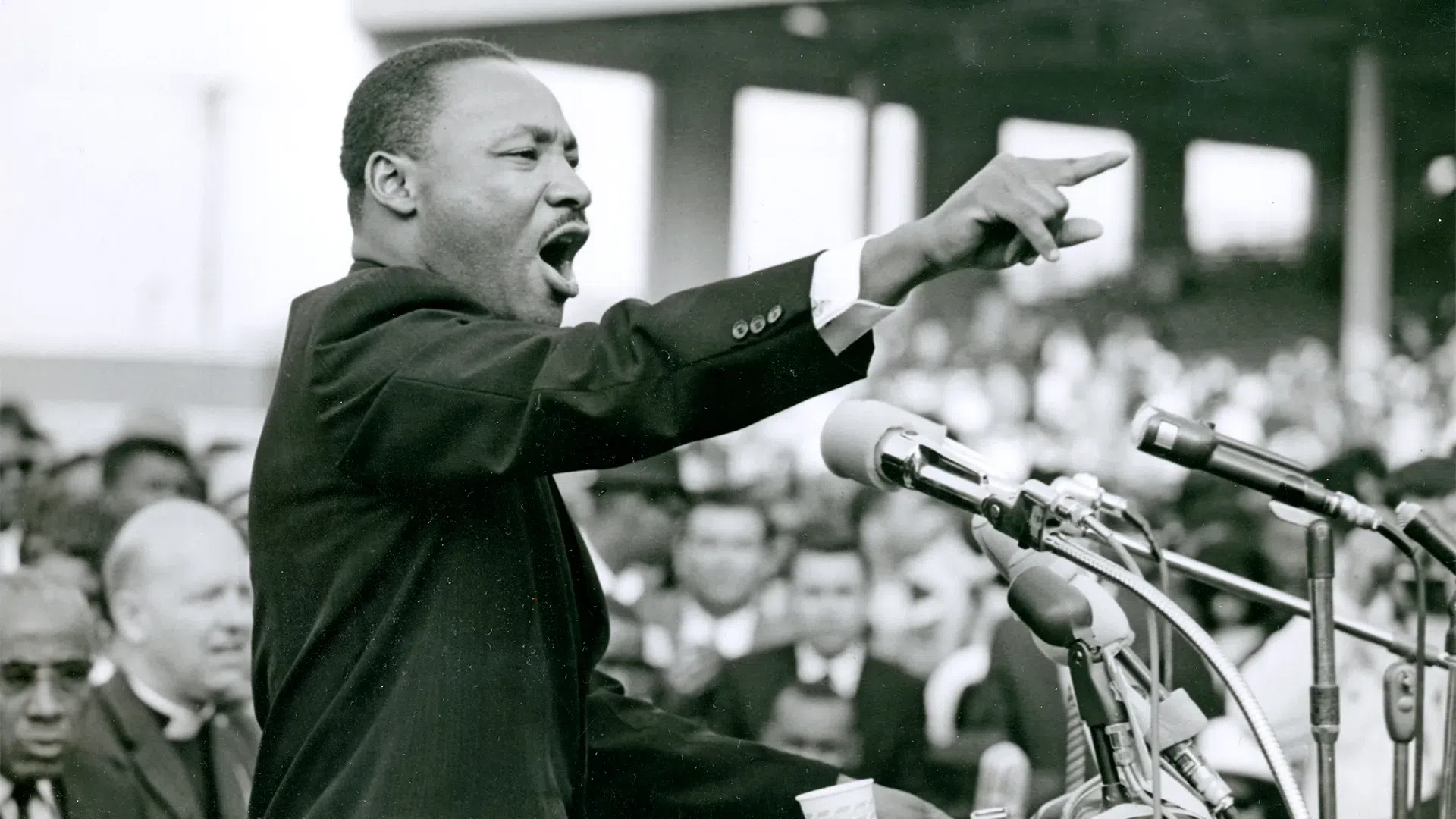
Though King organized many nonviolent demonstrations, perhaps the instance that comes to mind most readily for people is the 1963 March on Washington for Jobs and Freedom, which was attended by more than 260,000, according to the National Association for the Advancement of Colored People.
King delivered “one of the greatest speeches of the twentieth century” during the March, titled “I Have a Dream,” according to the NAACP. To commemorate this federal holiday, King’s 975-word speech is included below:
I am happy to join with you today in what will go down in history as the greatest demonstration for freedom in the history of our nation.
Five score years ago a great American in whose symbolic shadow we stand today signed the Emancipation Proclamation. This momentous decree is a great beacon light of hope to millions of Negro slaves who had been seared in the flames of withering injustice. It came as a joyous daybreak to end the long night of their captivity. But 100 years later the Negro still is not free. One hundred years later the life of the Negro is still badly crippled by the manacles of segregation and the chains of discrimination. One hundred years later the Negro lives on a lonely island of poverty in the midst of a vast ocean of material prosperity. One hundred years later the Negro is still languished in the corners of American
society and finds himself in exile in his own land. So we’ve come here today to dramatize a shameful condition.
In a sense we’ve come to our nation’s capital to cash a check. When the architects of our Republic wrote the magnificent words of the Constitution and the Declaration of Independence, they were signing a promissory note to which every American was to fall heir. This note was a promise that all men—yes, black men as well as white men—would be guaranteed the unalienable rights of life, liberty and the pursuit of happiness. . . .
We must forever conduct our struggle on the high plane of dignity and discipline. We must not allow our creative protests to degenerate into physical violence. . . . The marvelous new militancy which has engulfed the Negro community must not lead us to distrust all white people, for many of our white brothers, as evidenced by their presence here today, have come to realize that their destiny is tied up with our destiny.
. . . We cannot walk alone. And as we walk we must make the pledge that we shall always march ahead. We cannot turn back. There are those who are asking the devotees of civil rights, “When will you be satisfied?” We can never be satisfied as long as the Negro is the victim of the unspeakable horrors of police brutality.
We can never be satisfied as long as our bodies, heavy with the fatigue of travel, cannot gain lodging in the motels of the highways and the hotels of the cities. We cannot be satisfied as long as the Negro’s basic mobility is from a smaller ghetto to a larger one. We can never be satisfied as long as our children are stripped of their adulthood and robbed of their dignity by signs stating “For Whites Only.” We cannot be satisfied as long as the Negro in Mississippi cannot vote and the Negro in New York believes he has nothing for which to vote.
No, no, we are not satisfied, and we will not be satisfied until justice rolls down like waters and righteousness like a mighty stream. . . .
I say to you today, my friends, though, even though we face the difficulties of today and tomorrow, I still have a dream. It is a dream deeply rooted in the American dream. I have a dream that one day this nation will rise up, live out the true meaning of its creed: “We hold these truths to be self-evident, that all men are created equal.”
I have a dream that one day on the red hills of Georgia sons of former slaves and the sons of former slave-owners will be able to sit down together at the table of brotherhood. I have a dream that one day even the state of Mississippi, a state sweltering with the heat of injustice, sweltering with the heat of oppression, will be transformed into an oasis of freedom and justice.
I have a dream that my four little children will one day live in a nation where they will not be judged by the color of their skin but by the content of their character. I have a dream . . . I have a dream that one day in Alabama, with its vicious racists, with its governor having his lips dripping with the words of interposition and nullification, one day right there in Alabama little black boys and black girls will be able to join hands with little white boys and white girls as sisters and brothers.
I have a dream today . . .
This will be the day when all of God’s children will be able to sing with new meaning. “My country, ’tis of thee, sweet land of liberty, of thee I sing. Land where my fathers died, land of the pilgrim’s pride, from every mountain side, let freedom ring.” And if America is to be a great nation, this must become true. So let freedom ring from the prodigious hilltops of New Hampshire. Let freedom ring from the mighty
mountains of New York. Let freedom ring from the heightening Alleghenies of Pennsylvania. Let freedom ring from the snowcapped Rockies of Colorado. Let freedom ring from the curvaceous slopes of California.
But not only that. Let freedom ring from Stone Mountain of Georgia. Let freedom ring from Lookout Mountain of Tennessee. Let freedom ring from every hill and molehill of Mississippi, from every mountain side. Let freedom ring . . .When we allow freedom to ring—when we let it ring from every city and every hamlet, from every state and every city, we will be able to speed up that day when all of God’s children, black men and white men, Jews and Gentiles, Protestants and Catholics, will be able to join hands and sing in the words of the old Negro spiritual, “Free at last, Free at last, Great God a-mighty, We are free at last.”






Comments