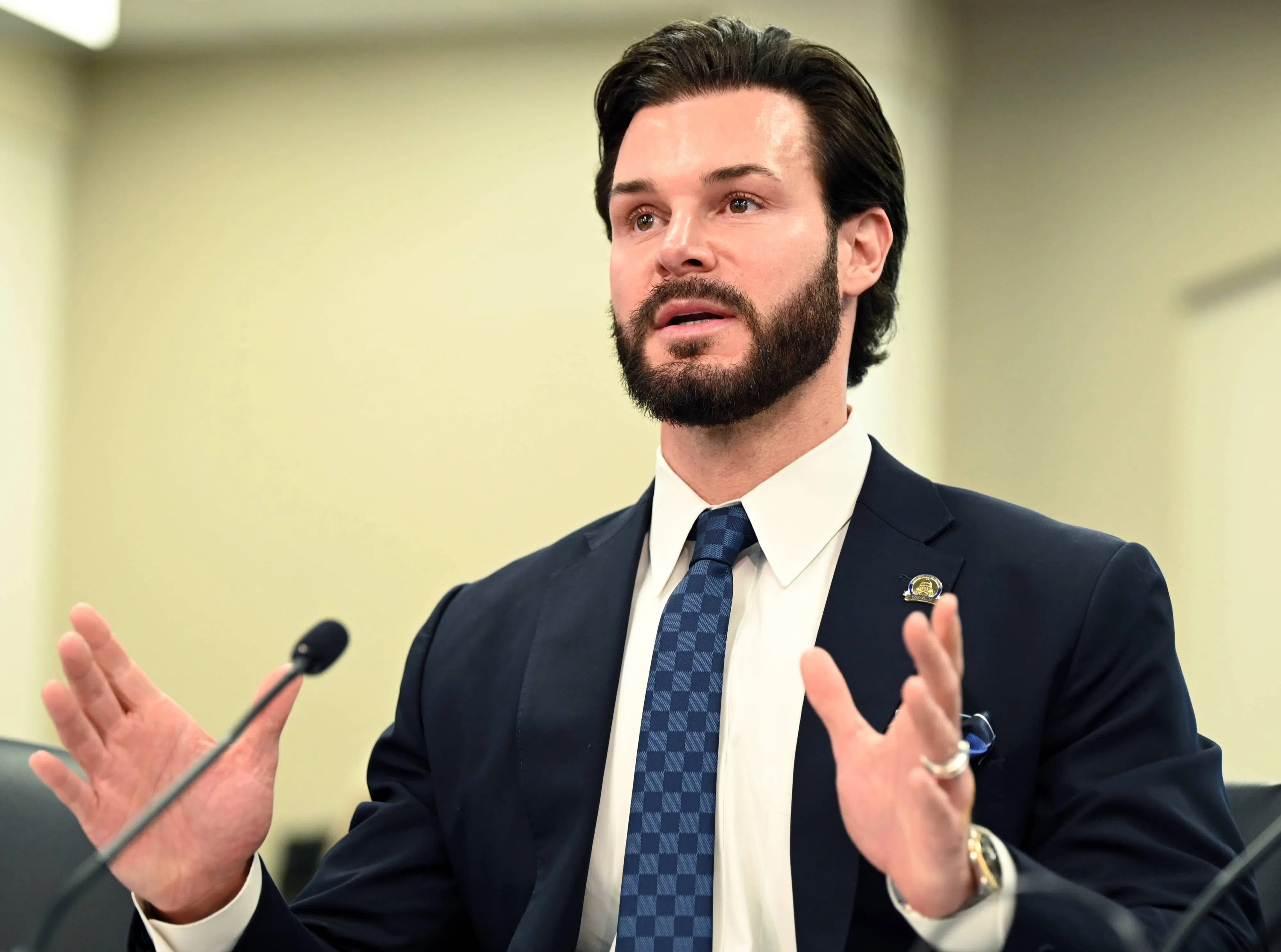
Sen. David Yates, D-Louisville, testifies Thursday during the Senate Judiciary Committee meeting. He spoke on Senate Bill 268, which would allow courts to order restitution for children whose parents are killed or disabled by impaired drivers.
(LRC Public Information)
FRANKFORT —The Senate Judiciary Committee voted unanimously Thursday to advance a bill that would allow courts to order restitution for children whose parents are killed or permanently disabled by an intoxicated driver.
The legislation — Senate Bill 268 — is named Melanie’s Law after the cousin of the bill’s sponsor, Sen. David Yates, D-Louisville. Melanie was left seriously injured following a crash involving an impaired driver.
Yates said his cousin is two weeks younger than he is, and she remains “hooked up on machines,” fighting for her life after the vehicular crash last summer. Melanie’s son, Nolan, was also in her vehicle during the crash, Yates said.
“We pray for a miracle every day for Melanie, but we know there’s no way that she will ever be able to provide for this child,” he said.
Yates said he learned as an attorney that it’s not uncommon for similar situations to occur. He said many of those who are incarcerated for DUI-related charges spend “a little time in prison and come out” and go on with their lives.
“But for Nolan, he’s going to struggle. And so what I believe is this is about fairness for the child. This is about accountability for the offender. It’s the deterrent effect, because it’s something that people will talk about,” he said.
According to the bill, the convicted driver shall pay restitution to each child or dependent of the victim until the child or dependent reaches 18 years of age — or possibly longer if the child is still in high school.
The court shall determine an amount of restitution that is reasonable and necessary after considering all relevant factors. That includes the financial needs and resources of the child and the standard of living to which the child is accustomed, the bill states.
If a defendant who is ordered to pay child support is incarcerated and unable to pay restitution, they will have up to one year after release to begin making payments.
Yates said the measure will encourage justice for the victims.
Sen. Danny Carroll, R-Benton, said the bill seeks accountability.
“Fairness, accountability and justice — those are words that I love,” he said. “We spend so much time these days trying to make offenders whole that we forget about the victims.”