





By GAGE WILSON
For Glasgow News 1
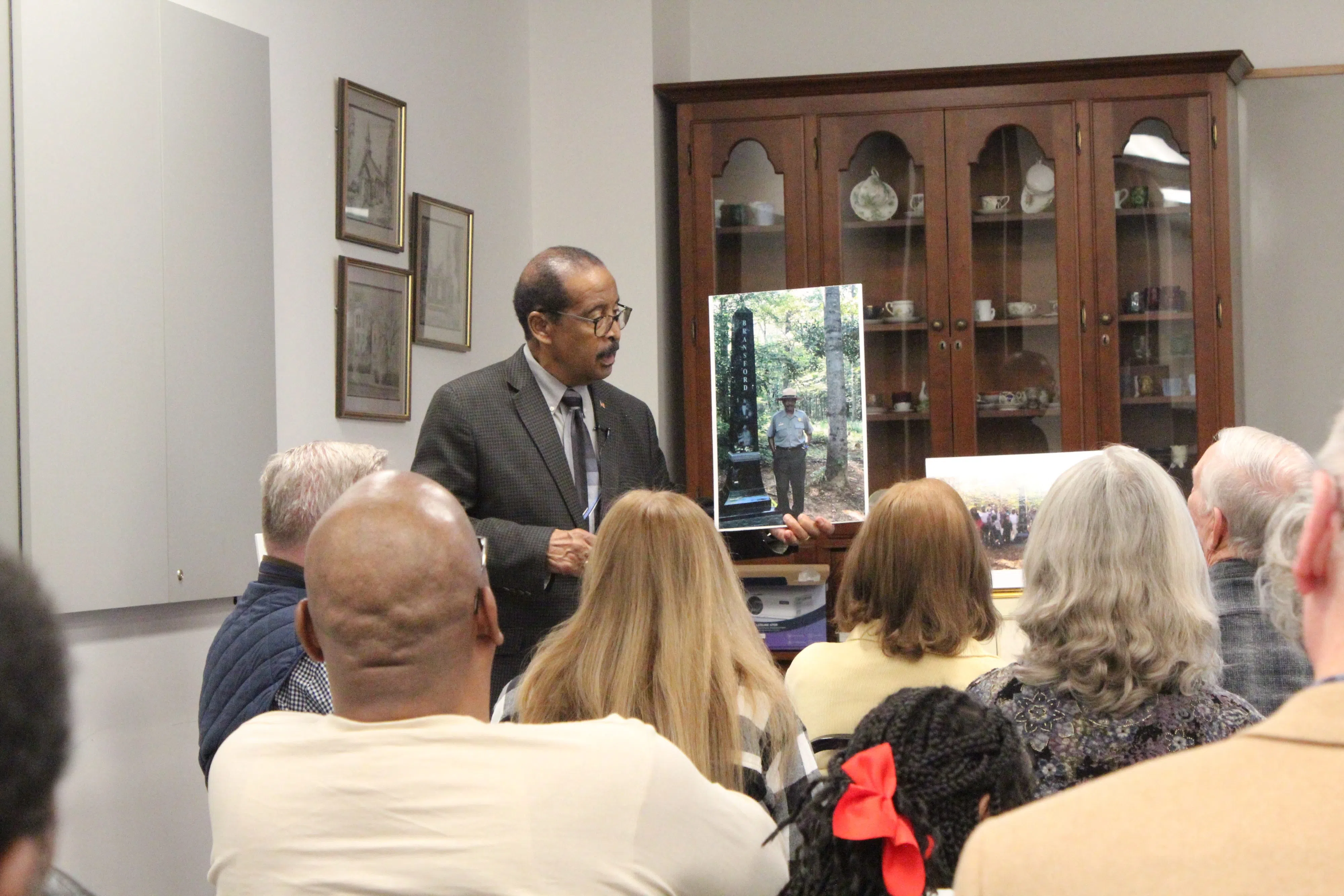
A solid crowd gathered to hear former Mammoth Cave guide Jerry Bransford share a history that runs deeper than the cave’s limestone corridors.
Bransford, a descendant of one of the cave’s early enslaved guides, spoke about Mammoth Cave through the lens of African American history — tracing the labor, intelligence and endurance of enslaved men whose expertise helped establish the site as an international destination long before it became Mammoth Cave National Park in 1941, during an event at the South Central Kentucky Cultural Center
Spanning multiple county lines, Mammoth Cave is the longest known cave system in the world, with more than 400 miles mapped to date. However, in the early 19th century it was a privately operated tourist attraction. Enslaved African American men were tasked with exploring, mapping and guiding visitors through its vast and often dangerous passageways.
Bransford is the great-great-grandson of Mat Bransford, one of those early guides. Like many of the cave’s enslaved workers, Mat was owned by cave proprietor Alfred Croghan during the mid-1800s. Historical records and National Park Service research show that enslaved guides were selected for their intelligence, composure and physical stamina. Tours could stretch for hours, covering miles of uneven terrain lit only by oil lamps. Guides memorized intricate routes, led exploratory trips into unmapped passages and were expected to interpret geology and local lore for curious travelers.
While Stephen Bishop is perhaps the most widely recognized of Mammoth Cave’s enslaved explorers — credited with discovering major sections of the cave and producing a remarkably accurate 1842 map from memory – Bransford emphasized that Bishop worked alongside other skilled guides, including members of the Bransford family.
Mat Bransford and his relative Nick Bransford were among those respected for their deep knowledge of the cave’s layout. As tourism expanded in the mid- to late-1800s, Mammoth Cave drew scientists, writers and even European aristocrats. “At six or seven miles in,” he said. “Folks are a lot nicer.”
The success of those tours depended heavily on the expertise of enslaved guides who navigated visitors safely through treacherous terrain.
After emancipation, members of the Bransford family continued guiding. Nick Bransford became known in the late 19th century as tourism evolved and formerly enslaved guides began receiving wages for their work, though racial inequities persisted. For some Black families in the region, including the Bransfords, guiding became a multi-generational profession rooted in familiarity with the cave.
Bransford’s presentation was accompanied with several pictures of the cave, with two striking bits of words written on the cave walls made visible after restoration efforts. One from 1857 read: “To Nick the Guide,” another in a different region of the cave described Nick as the “best guide at the cave.”
Throughout Bransford’s talk a paradox came to light – enslaved men were entrusted with leading wealthy white visitors through one of the world’s most complex landscapes while being denied their own freedom above ground. Their mastery underground stood in stark contrast to the bondage that defined their daily lives.
Maclean Lessenberry, director of Glasgow-Barren County Tourism, reflected on the Bransford family’s legacy as guests began to share their own stories after the hour-long presentation.
“The Bransford family’s story is inseparable from the history of Mammoth Cave National Park, truly reflecting generations of knowledge and stewardship that helped shape how the world first experienced this place,” Lessenberry said.
She added that recognizing that human history alongside the geological wonder enhances the visitor experience.
“When both locals and visitors understand that human legacy alongside the magnificent natural wonder, they connect more deeply to the park,” she said. “Helping people make that deeper connection is always the goal.”
Today, Mammoth Cave National Park is internationally recognized for its geological importance. Yet, as Bransford reminded the audience, its human history is equally expansive. The maps, discoveries and guiding traditions established by enslaved African American men laid the groundwork for modern cave exploration and tourism.
For Bransford, sharing that history is both personal and restorative. By telling the stories of Mat and Nick Bransford – not as footnotes but as foundational figures – he is helping ensure that the legacy of Mammoth Cave includes the names and narratives of those who knew it first and knew it best.
“I want to keep all these men’s stories alive,” he said




Comments