




By Gage Wilson
For Glasgow News 1
Internationally recognized bat researcher, conservationist and photographer Merlin Tuttle will headline Mammoth Cave National Park’s annual Bat Day on Saturday, Sept. 5, as the park invites visitors to spend a day learning about some of its smallest – and often most misunderstood – residents.
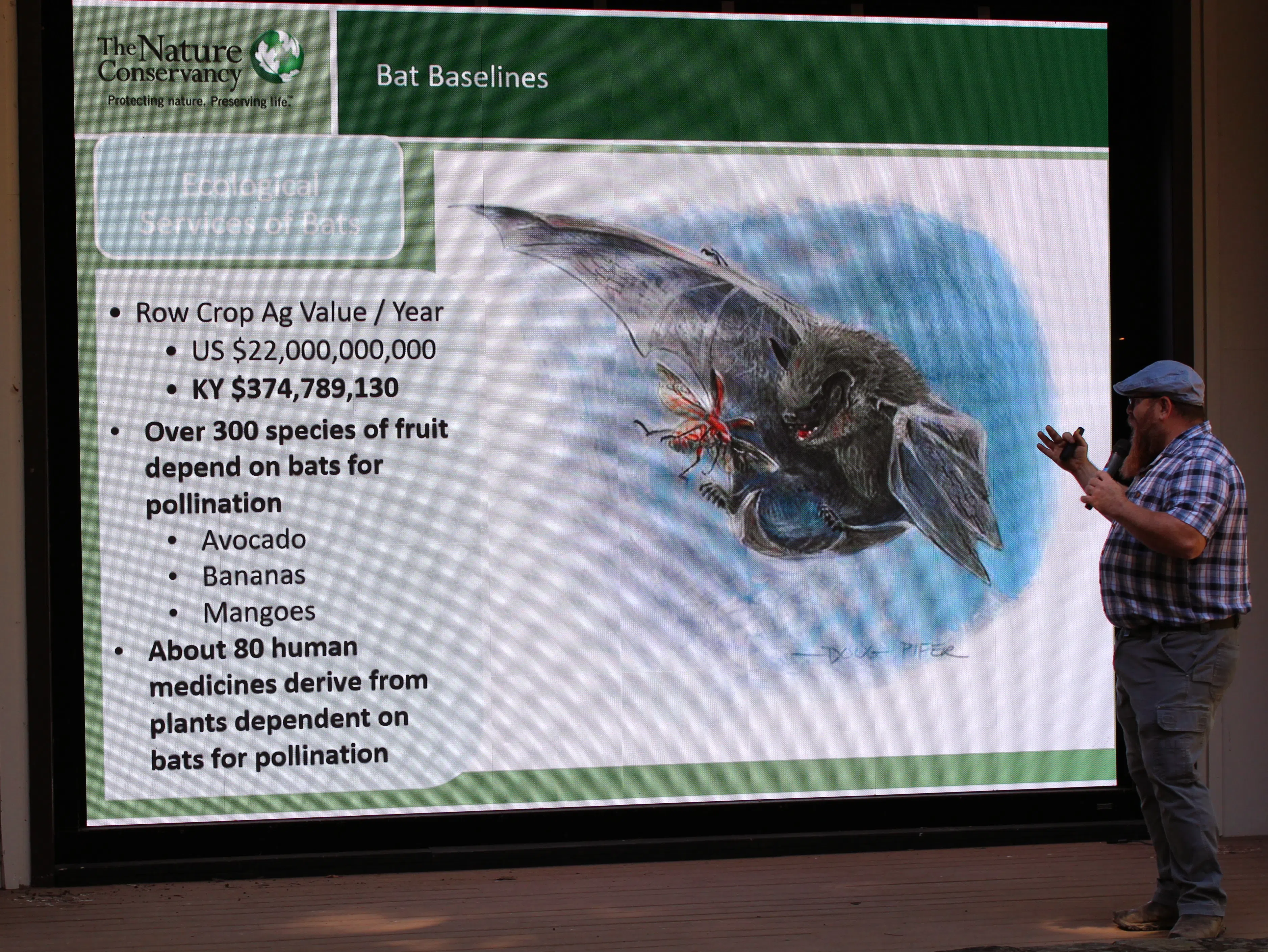
Tuttle, founder and executive director of Merlin Tuttle’s Bat Conservation, will present “The Secret Lives of Bats” at 11 a.m. in the park’s outdoor amphitheater. His presentation will focus on misconceptions surrounding bats, their ecological and economic importance, adaptations found among species around the world and the role public awareness plays in conservation.
The presentation is one part of a full day of free programming planned at Mammoth Cave, including talks from researchers and conservationists, hands-on demonstrations and an evening opportunity to watch scientists collect information from bats near the Historic Entrance. No tickets or advance registration are required, though programs are weather dependent.
Tuttle brings more than six decades of experience studying bats to Mammoth Cave. He began working with the animals as a teenager and later earned a doctorate in ecology and evolution from the University of Kansas, with his dissertation focusing on the population ecology of gray bats. He founded Bat Conservation International in 1982 and led the organization until 2009 before founding Merlin Tuttle’s Bat Conservation in 2014.
His work has combined scientific research with photography and public education, with an emphasis on changing long-held perceptions of bats and demonstrating their importance to people and ecosystems. Tuttle has studied and photographed hundreds of bat species on every continent where bats are found and has previously conducted field work at Mammoth Cave National Park, including a bat cave survey in 2019.
That work has particular relevance at Mammoth Cave.
The national park is home to 13 confirmed bat species, and researchers monitor populations throughout the year using techniques including cave surveys, exit counts, infrared and thermal imaging and the temporary capture of bats to record measurements and other information.
Several of those species have faced significant conservation challenges, particularly following the arrival of white-nose syndrome, a fungal disease first detected at Mammoth Cave in 2012. The National Park Service reports some species have experienced population declines exceeding 90 percent.
Among the park’s bats are the federally endangered Indiana, gray and northern long-eared bats. While gray bats have fared comparatively well – researchers documented approximately 350,000 hibernating in one park cave in 2019 – northern long-eared bats have been particularly affected by white-nose syndrome, with the number captured or observed during park surveys declining by more than 99 percent.
Bat Day will begin at 10 a.m. with a presentation from David Foster of the American Cave Conservation Association and Jay Pruitt of Hidden River Cave on the use of cave and mine gates to protect wildlife habitat.
Following Tuttle’s 11 a.m. presentation, programming will move to the visitor center from 1 to 3 p.m., where Dr. Michael Granatosky of the University of Tennessee Knoxville will demonstrate bat wing biomechanics and how injuries can affect flight. Dr. Tim Carter and Ball State University wildlife biology students will also demonstrate techniques used by bat biologists in the field, including mist-netting and data collection.
Activities return to the amphitheater at 4 p.m. with biologist Keith Christenson discussing bat research conducted around the world, followed at 5 p.m. by Carter presenting on the bats found at Mammoth Cave and the methods researchers use to study them.
The day will conclude from 7 to 9 p.m. near the Historic Entrance with “Bats in Hand,” a live research demonstration allowing visitors to observe researchers capture bats, collect data and assess the health and diversity of species found in the park. Bat handling will be limited to researchers and park staff.
Bat Day is supported by Friends of Mammoth Cave National Park, which assists the park in bringing speakers to the annual event and providing other event support.
All Bat Day programs are free. The National Park Service recommends visitors attending outdoor programs bring water, sun protection and clothing appropriate for the weather. Evening activities may require walking across uneven terrain near the cave entrance.


Comments